
Turn on suggestions
Auto-suggest helps you quickly narrow down your search results by suggesting possible matches as you type.
Showing results for
Get Started Discussions
Start your journey with Databricks by joining discussions on getting started guides, tutorials, and introductory topics. Connect with beginners and experts alike to kickstart your Databricks experience.
Turn on suggestions
Auto-suggest helps you quickly narrow down your search results by suggesting possible matches as you type.
Showing results for
- Databricks Community
- Get Started Discussions
- Databricks Scenarios
Options
- Subscribe to RSS Feed
- Mark Topic as New
- Mark Topic as Read
- Float this Topic for Current User
- Bookmark
- Subscribe
- Mute
- Printer Friendly Page

Options
- Mark as New
- Bookmark
- Subscribe
- Mute
- Subscribe to RSS Feed
- Permalink
- Report Inappropriate Content
11-25-2025 09:51 PM
I’m a data engineer with some experience in Databricks. I’m looking for real-life scenarios that are commonly encountered by data engineers. Could you also provide details on how to implement these scenarios?


1 ACCEPTED SOLUTION
Accepted Solutions

Options
- Mark as New
- Bookmark
- Subscribe
- Mute
- Subscribe to RSS Feed
- Permalink
- Report Inappropriate Content
11-25-2025 11:24 PM - edited 11-25-2025 11:25 PM
This is a very generic question with an even broader response. However, think of scenarios in which the most common architecture called Medallion Architecture can be applied along with very high volume of data:
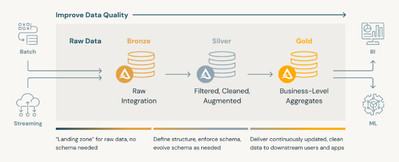
https://learn.microsoft.com/en-us/azure/databricks/lakehouse/medallion
https://www.databricks.com/glossary/medallion-architecture
Based on the above, some real-life scenarios:
1. Building a 360° Customer View
Business problem
Customer data lives in multiple systems:
CRM (Salesforce)
Support tickets (Zendesk)
Marketing tools
Website logs
In-store POS
Leaders want one unified view of the customer:
Lifetime value
Churn risk
Purchase history
Behavior patterns
Data Engineering role
Integrate, clean, and merge sources → maintain a golden customer table used by analytics, marketing, and ML
2. Real-Time Operational Dashboards
Business problem
Managers need up-to-the-minute insights:
Orders per minute
Fraud alerts
Inventory levels
Shipments in transit
Data Engineering role
Build streaming pipelines that feed dashboards with low latency, powering decisions like:
Detecting issues earlier
Balancing supply/demand faster
Notifying teams when KPIs drop
3. Supply Chain Optimization
Business problem
Logistics teams want to:
Predict stock shortages
Optimize delivery routes
Reduce warehouse costs
Track shipments in real time
Data Engineering role
Integrate:
Vendor data
Warehouse systems
IoT sensors
Transportation APIs
Deliver actionable datasets to planning/ML teams.
4. Executive Decision Dashboards
Business problem
C-level wants:
One version of truth
KPIs updated daily
A curated layer of governed metrics
Data Engineering role
Provide a semantic layer:
Sales
Revenue
Retention
Operational KPIs
Forecasts
Ensure dashboards don’t break and metrics are consistent across the company. models.
5. Predictive Maintenance (IoT)
Business problem
Manufacturers need to avoid:
Machine failures
Unexpected downtime
Costly repairs
Data Engineering role
Ingest IoT sensor data:
Temperature
Vibration
Pressure
Usage cycles
Provide structured data for ML models that predict failures.
3 REPLIES 3
Options
- Mark as New
- Bookmark
- Subscribe
- Mute
- Subscribe to RSS Feed
- Permalink
- Report Inappropriate Content
11-25-2025 10:52 PM
Can someone Help me with this
Options
- Mark as New
- Bookmark
- Subscribe
- Mute
- Subscribe to RSS Feed
- Permalink
- Report Inappropriate Content
11-25-2025 11:24 PM - edited 11-25-2025 11:25 PM
This is a very generic question with an even broader response. However, think of scenarios in which the most common architecture called Medallion Architecture can be applied along with very high volume of data:
https://learn.microsoft.com/en-us/azure/databricks/lakehouse/medallion
https://www.databricks.com/glossary/medallion-architecture
Based on the above, some real-life scenarios:
1. Building a 360° Customer View
Business problem
Customer data lives in multiple systems:
CRM (Salesforce)
Support tickets (Zendesk)
Marketing tools
Website logs
In-store POS
Leaders want one unified view of the customer:
Lifetime value
Churn risk
Purchase history
Behavior patterns
Data Engineering role
Integrate, clean, and merge sources → maintain a golden customer table used by analytics, marketing, and ML
2. Real-Time Operational Dashboards
Business problem
Managers need up-to-the-minute insights:
Orders per minute
Fraud alerts
Inventory levels
Shipments in transit
Data Engineering role
Build streaming pipelines that feed dashboards with low latency, powering decisions like:
Detecting issues earlier
Balancing supply/demand faster
Notifying teams when KPIs drop
3. Supply Chain Optimization
Business problem
Logistics teams want to:
Predict stock shortages
Optimize delivery routes
Reduce warehouse costs
Track shipments in real time
Data Engineering role
Integrate:
Vendor data
Warehouse systems
IoT sensors
Transportation APIs
Deliver actionable datasets to planning/ML teams.
4. Executive Decision Dashboards
Business problem
C-level wants:
One version of truth
KPIs updated daily
A curated layer of governed metrics
Data Engineering role
Provide a semantic layer:
Sales
Revenue
Retention
Operational KPIs
Forecasts
Ensure dashboards don’t break and metrics are consistent across the company. models.
5. Predictive Maintenance (IoT)
Business problem
Manufacturers need to avoid:
Machine failures
Unexpected downtime
Costly repairs
Data Engineering role
Ingest IoT sensor data:
Temperature
Vibration
Pressure
Usage cycles
Provide structured data for ML models that predict failures.

Options
- Mark as New
- Bookmark
- Subscribe
- Mute
- Subscribe to RSS Feed
- Permalink
- Report Inappropriate Content
11-26-2025 12:34 AM
Generic topic. Here are few latest article to help you on this
RG #Driving Business Outcomes with Data Intelligence

Announcements


Related Content
- Is the Data Engineer Learning Plan enough to pass the Databricks Certified Data Engineer Associate e in Certifications
- Does anyone has databricks 100% voucher code? in Certifications
- Need assistance escalating Databricks Academy account transfer (Ticket marked closed / unmonitored) in Certifications
- Serverless DNS requests to external API being DROPPED despite FULL_ACCESS network policy and no bloc in Get Started Discussions
- Course language change request: Databricks GenAI (Korean to English) in Certifications